CARRYING ONE FRAME AT A TIME

Behind the Scenes with Atlas Film Productions
Dive into the story of Red Roots, sharing insights and moments.
Damon Naidoo
12/11/20255 min read
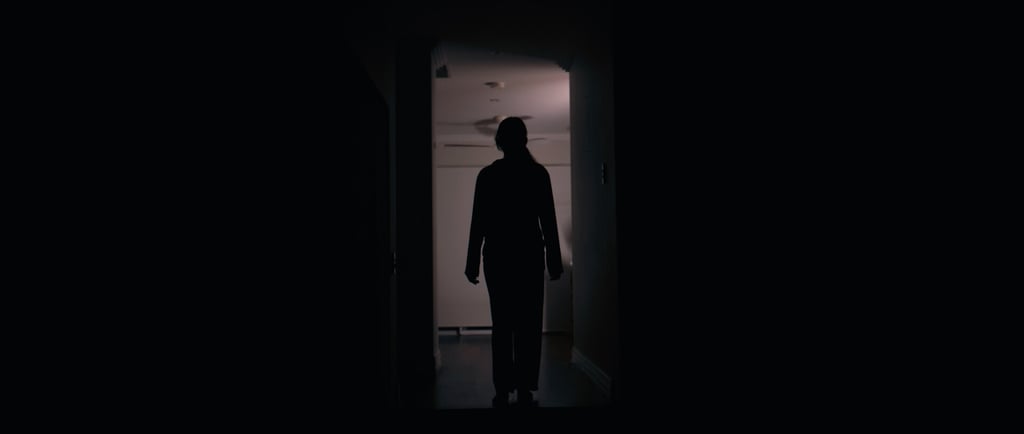
Film in action
SYNOPSIS
Lucy is plagued with nightmares of chasing her younger sister Rosie through the woods, with each dream feeling more real and echoing with whispers of truths she can't accept. One night, the nightmare bleeds into reality and Lucy hears Rosie's voice calling from her untouched bedroom, preserved like a shrine for the past year. Inside, Lucy finds Rosie sitting there on her bed, seemingly alive. The two girls reconnect, but Rosie's words and presence feel strangely off, tugging at Lucy to return to the woods.
As memories resurface, Lucy is forced to relive that night of Rosie's argument with her boyfriend, George, and the tragic accident that resulted in a death. Torn between denial and guilt, Lucy discovers that the visions of Rosie are manifestations of her own fractured memory. In the end, Lucy must face the horror that her sister never left at all, that she lies beneath the earth and Lucy's mind has been her grave keeper.
ABOUT THE DIRECTOR
Director Biography - Jayne Forster
Jayne Forster is an emerging filmmaker studying at Murdoch University in Perth, Western Australia. She has predominantly focused on scriptwriting and production design in her studies so far, but has had the opportunity this year to write and direct the short film "Red Roots," exploring themes of memory, guilt, and the unseen internal forces that shape human behaviour. This film showcases
her signature narrative style, which is a psychological horror that employs dream logic, colour, and sound to externalise internal trauma, presenting a voice that is deeply emotional, visually striking, and a commitment to exploring the complexities of the human psyche. Jayne
plans to expand her portfolio in the psychological genre and continue creating films that challenge perceptions, evoke empathy, and stay with audiences long after the credits roll.
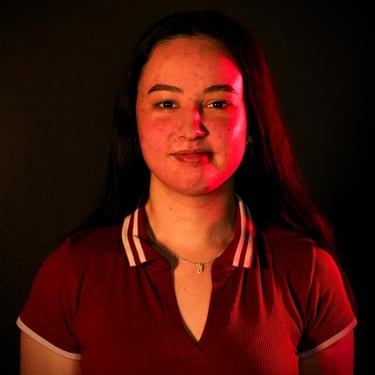

Watch the trailer now
Director Statement
Red Roots is a story about Lucy, a young woman and her internal struggle of accepting the guilt of accidentally killing her beloved little sister, Rosie, whom she adored and swore to protect after the death of their parents. One night, Lucy comes home to find Rosie fighting again with her drunk and abusive boyfriend, George. In an attempt to protect Rosie, Lucy inserts herself into their fight, grabs a piece of the chair George broke, and swings it towards George. As she does, George quickly ducks, and Lucy accidentally hits Rosie instead. Since that night, Lucy has been trapped in a never-ending cycle of guilt, grief and trauma, and is unable to accept the truth that she killed her sister. The audience will explore the blur between reality, hallucination, memory and nightmare through Lucy's fractured perception.
Red Roots asks how far people will go to protect their loved ones, and what happens when that instinct destroys them. The film is a tragedy disguised as a horror, where the monster is not physical, but is the unresolved trauma festering inside Lucy. Ultimately, Red Roots is about the inescapability of the truth and the fact that no matter how deeply people try to bury the past, whether under dirt, memory, or silence, it always finds a way to resurface.
Cinematography will be vital to exploring Lucy’s fractured reality. The woods are not simply a physical setting but a reflection of Lucy’s state of mind. In the nightmares, there will be oversaturated colours, exaggerated contrasts, and shifting focuses to make the environment feel unnatural and unstable and to show the unreliable world where the lines between nightmare, memory, and reality blur. Camera movement will be used to mirror Lucy’s perspective, including handheld shots to show panic or fear when she is unravelling. In moments of reflection or confrontation, the camera movement may slow down or be still to show Lucy
trapped in her own guilt. Colour grading will assist in showing Lucy’s fractured reality, including oversaturated hues in the nightmares, and colder desaturated tones in Lucy’s present
day.
Throughout the film, a key focus will be on the colour red. For the overall colour palette of the woods, I have drawn inspiration from the film Final Girl, directed by Tyler Shields, 2015, where the main character is wearing a red dress in the middle of the forest. I intend for the nightmare scenes to look similar to this, with a little over-saturation to make it look unnatural.
Production design will help to layer in the symbolism throughout the film. Rosie’s untouched bedroom is a key space, covered in dust, yet frozen as though time has stopped. When Lucy enters the room and hallucinates Rosie sitting there on the bed, it should become clear that Lucy keeps that room as a shrine to her little sister. Every object seen within this room becomes a physical marker of grief: the name on the door, the bed, and especially Rosie’s little compact mirror that Lucy gifted her. The woods act as the film’s other central location. Both locations offer a physical and psychological space, where the red and bloodied root and soil become metaphors for the truth that Lucy has tried to keep buried for the past year. Rosie’s recurring compact mirror is one of the most important objects in the film, as the cracked mirror that Lucy
digs up from the grave becomes a literal reflection of what she has been avoiding. Mirrors, reflections and other distortions will be used to visually reinforce the film’s theme of fractured memory, reality and identity, forcing Lucy (and the audience too) to confront both versions of Rosie, the real sister and the one that Lucy has constructed as a result of her guilt.
Since many forest shots will be quite dark, the film will rely heavily on sound design to fill in any blank spaces. The woods will almost have a life of its own. There will be roars and whispers through the trees, as if an unstable presence is there following Lucy. These whispers hidden within the wind will be indistinct voices echoing Lucy’s thoughts. Parts of it will be Rosie’s voice, layered and distorted, and her words will often sound out of sync or uncanny, making it feel unsettling and unnatural. The wind will come in quick bursts, sometimes cutting into silence before surging back louder every time, disorienting both Lucy and the audience. The
score for Red Roots will be eerie and may incorporate the woods' uneasy sounds to raise the audience's tension.
Ultimately, Red Roots is a psychological horror, but not in the way of shocking twists or jump scares. It’ll be about creating an atmosphere where unease lingers, and the terror is slow, creepy
and emotionally resonant. I intend to show a very intimate and character-driven story where Lucy’s journey is not only to uncover what happened to Rosie, but to finally confront and accept it, even if it destroys her.
Contact
Reach out for bookings or questions
Phone
Admin@atlasfilmco.com
0413 509 848
© 2025. All rights reserved.